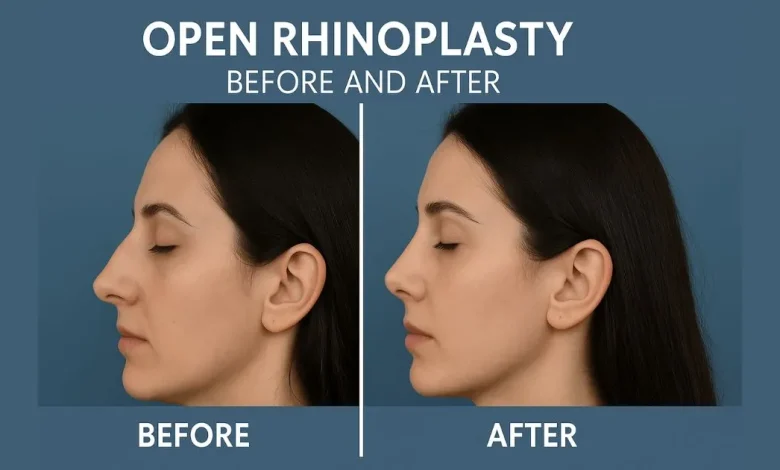
Thinking about changing the shape of your nose can feel overwhelming at first. But for many people, open rhinoplasty offers a clear solution when precision and access are important. This method gives surgeons a full view of the nasal structure, which helps when making detailed adjustments. For those considering open rhinoplasty, knowing what to expect can make the entire experience a lot smoother.
The Difference Between Open and Closed
With rhinoplasty, there are generally two approaches: open and closed. Open involves a small incision across the columella, the bit of skin between the nostrils. This lets the surgeon lift the skin off the tip of the nose to work with more visibility. Closed rhinoplasty, on the other hand, keeps all incisions inside the nose.
Open rhinoplasty is usually chosen for more complex cases or when greater accuracy is needed. It’s commonly used for reshaping the nasal tip, correcting deformities, or revising previous surgeries.
What Happens on Surgery Day
After your consultation and pre-op checks, the procedure typically takes two to three hours. You’ll be under general anesthesia, so you won’t feel anything during the operation. Once the incisions are made, the surgeon adjusts bone, cartilage, and soft tissue to achieve the desired result.
In some cases, cartilage grafts from your septum or even your ear might be used to support the new shape. Everything is stitched up carefully, and a splint is placed on the nose to protect it while healing.
The First Week of Recovery
You’ll likely have some swelling and bruising, especially around the eyes. This is totally normal and tends to peak around day three or four. Most people wear the splint for about a week, and once it’s removed, you’ll get your first look at the new shape.
During this time, it’s important to avoid blowing your nose, bending over, or doing anything that raises blood pressure. Keep your head elevated and follow any post-op instructions carefully. Cold compresses and gentle cleaning around the incision help speed things along.
Long-Term Healing Process
The nose continues to heal long after the splint comes off. While the initial swelling goes down fairly quickly, subtle swelling can last for months. It might take up to a year for the final shape to fully settle, especially in the tip.
That said, most people notice major improvements early on. Changes in breathing or appearance are often noticeable once the first few weeks of recovery pass. Taking progress photos every month or so helps track the slow but steady changes.
Common Questions and Answers
- Will it leave a scar? The scar is very small and placed in an area that usually heals with minimal visibility.
- Is it painful? Most people say it’s more uncomfortable than painful. You might feel some pressure or congestion but not sharp pain.
- Can I go back to work quickly? Many return to work or normal activities after about 10 days, depending on how visible the bruising is.
Making the Choice
Open rhinoplasty isn’t something to rush into. It’s a surgical procedure that requires careful thought and an experienced surgeon. People usually choose it when they want noticeable but natural-looking results and don’t mind a bit of downtime in exchange.
Understanding how the procedure works and what recovery is like helps take away a lot of the fear. It’s all about preparation, communication with your surgeon, and giving your body the time it needs to heal properly.