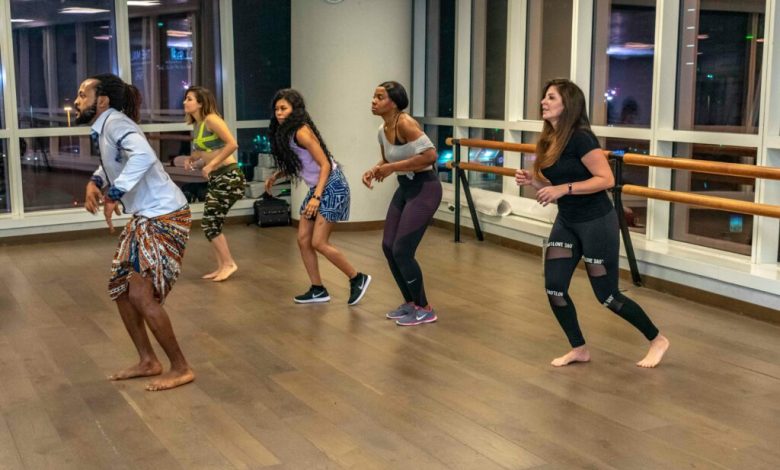
It is possible to complete a dance fitness routine while barely using the arms. The feet follow the steps, but the upper body remains guarded and close to the torso. This may feel easier to coordinate, yet it changes the physical character of the workout.
In Zumba classes Singapore, arm patterns are not merely decorative additions to lower-body choreography. Large reaches, sweeps, punches and overhead actions can increase muscular involvement, coordination demands and overall exercise intensity.
More Moving Mass Requires More Work
Moving the arms through a large range requires muscular effort. The shoulders, upper back, chest and arms contribute while the trunk helps control the movement.
When arm patterns are added to continuous stepping, more of the body becomes active. Heart rate and breathing may rise even when the lower-body pattern remains unchanged.
This gives participants a useful intensity tool. They can increase whole-body demand without automatically adding jumps or faster footwork.
The effect depends on movement quality. Loose, uncontrolled arm swinging is not the same as deliberate movement through a comfortable range.
Arm Position Changes Leverage
An arm held close to the body is easier to move than one extended farther away.
Longer lever positions increase the muscular demand around the shoulder. Reaching overhead can also feel harder because the arms move against gravity and the upper body must remain organised.
This helps explain why two versions of the same sequence can feel very different:
- Bent elbows near the ribs create lower demand.
- Extended arms at shoulder height create greater demand.
- Repeated overhead reaches may raise demand further.
Participants can adjust arm length and height without abandoning the choreography.
Coordination Raises the Cognitive Load
Adding arms to footwork creates a coordination task.
The lower body may be moving laterally while the arms travel overhead. One arm may perform a different pattern from the other. The sequence may also change with the music.
A participant who manages the footwork easily can suddenly lose rhythm when the arms are added.
This does not mean the individual lacks fitness. It means the brain is organising more movement information at once.
A useful strategy is to establish the feet first, then add one arm pattern. Simplification allows continuous movement while coordination develops.
The Trunk Connects the Arms and Legs
Arm movement does not occur independently from the rest of the body.
Large reaches and punches create forces that the trunk must control. If the torso collapses or rotates excessively, the participant may feel unstable.
Useful trunk control allows movement without unnecessary rigidity. The body can rotate where the choreography requires it while still maintaining balance over the feet.
The objective is not to keep the spine completely fixed. It is to prevent arm actions from pulling the participant out of position.
Why Overhead Movement Feels Intense
Repeatedly moving the arms overhead may increase perceived effort. The shoulder muscles work continuously, and participants often raise their breathing rate.
However, overhead actions should remain comfortable. People with shoulder pain, limited mobility or certain health conditions may need alternatives.
Practical modifications include:
- Keeping the hands below shoulder height
- Bending the elbows
- Alternating one arm at a time
- Reducing movement speed
- Using forward reaches instead of overhead reaches
- Temporarily removing the arm pattern
The lower-body step can continue while the upper-body demand is scaled.
Arm Movement Is Not Upper-Body Strength Training
Zumba arm patterns can improve muscular endurance and coordination, but they do not replace progressive resistance training.
Body-weight arm actions provide limited external resistance. The muscles may feel tired because of repetition, yet the load cannot be increased as systematically as it can with dumbbells, cables or machines.
A balanced programme should include pulling and pressing movements appropriate to the individual.
Dance classes and resistance training serve different purposes. Combining them is more useful than claiming one format does everything.
Technique Matters Under Fatigue
As fatigue develops, arm patterns often lose control before participants notice.
Common changes include:
- Shoulders rising towards the ears
- Elbows locking forcefully
- Arms dropping below the intended range
- The torso leaning to create momentum
- Punches becoming uncontrolled
- Breathing becoming restricted
These changes are signals to reduce range or simplify the pattern.
The participant should not chase the full choreography at the expense of shoulder comfort and balance.
Arm Patterns Can Maintain Intensity During Low-Impact Steps
Participants who avoid jumping sometimes worry that their workout will not be demanding enough.
Large, controlled arm movements can help maintain whole-body effort while the feet remain grounded.
For example, a basic side step can be paired with:
- Alternating overhead reaches
- Forward punches
- Wide arm sweeps
- Controlled pulls towards the ribs
- Diagonal reaches
This allows the class to remain energetic without requiring high-impact footwork.
The participant can also adjust step width and arm range independently.
The Role of Posture
Arm movement becomes less efficient when the upper body is collapsed.
Participants should avoid forcing the chest upward or holding a rigid military posture. Instead, they can aim for:
- A comfortable upright position
- Relaxed neck and jaw
- Shoulders that can move freely
- Stable but not locked knees
- Continuous breathing
- Eyes forward rather than fixed on the floor
Good posture should support movement, not make it look artificial.
Space and Group Safety
Wide arm actions require awareness of nearby participants.
Crowded rooms may force people to shorten movements unexpectedly. Instructors should match arm choreography to class capacity and provide narrower alternatives.
Participants should avoid holding hard objects or unsecured phones during class. Jewellery that catches on clothing may also become distracting.
A clear personal movement area allows the arms to travel without collision.
Building Better Arm Endurance
Upper-body endurance can improve through class participation, but additional strength work may make large arm patterns easier to sustain.
Rows, presses, lateral raises and controlled pulling exercises can strengthen relevant muscle groups. Appropriate load and technique matter more than completing a long list of exercises.
Members training at True Fitness Singapore can combine Zumba sessions with gym-based upper-body work, creating a more rounded weekly plan.
Strength sessions should support class performance rather than leave the shoulders constantly fatigued.
Use the Arms Deliberately
Arm choreography has the greatest value when it is treated as an adjustable training variable.
Participants can change:
- Range
- Lever length
- Height
- Speed
- Symmetry
- Number of repetitions
A newcomer might begin with bent elbows and smaller movements. A more experienced participant can use longer, more expressive patterns while maintaining control.
The difference should be based on ability, not pressure to look identical to the instructor.
Whole-Body Demand Without Unnecessary Complexity
Zumba arm patterns can raise cardiovascular and muscular demand while adding coordination and expression.
They are especially useful for participants choosing low-impact footwork, but they should remain scalable for shoulder comfort and movement control.
The best version is not necessarily the largest. It is the one the participant can coordinate with the lower body, sustain through the track and repeat without pain.
Frequently Asked Questions
Why does my heart rate rise when I add arm movements?
More muscle mass becomes involved, particularly during large or overhead actions. This can increase overall exercise demand.
Should my arms remain overhead if my shoulders become tired?
No. Lower the hands, bend the elbows or remove the arm pattern while continuing the footwork.
Can Zumba arm patterns tone the upper body?
They can develop muscular endurance, but meaningful strength and muscle development generally require progressive resistance training.
Why can I follow the feet but not the arms?
Coordinating separate upper-body and lower-body patterns increases cognitive demand. Learn the footwork first and add the arms gradually.
Are punches safe in dance fitness?
They can be when controlled. Avoid locking the elbows, throwing the shoulder forward or punching beyond your comfortable range.